15 Most Popular Foods in Morocco
Morocco is a bridge between Europe and Africa and a crossroads of civilizations. The Moroccan table encompasses dishes of Berber, Arabic, Jewish, Andalusian, African and Maghrebi origins, given that the Kingdom has been, since ancient times, a land of coexistence of several civilizations and cultures.
The food of Morocco ranks high on lists of the world's best cuisines and is well worth exploring. You won't be disappointed with the incredible variety, flavorful seasoning, and innovative ingredient combinations that await you.
Dishes differ from one region to another in Morocco, as each region is characterized by specific dishes which translate its history and customs. Certain dishes are prepared according to certain special rituals, or on certain occasions.
We listed some of the most popular foods that you should try when you are in Morocco.
1. Tagine
Strictly speaking, Tagine is not a dish, but a cooking utensil. A tagine is a conical earthenware pot and the dish prepared in the tagine pot shares the same name as it’s cooking vessel. So tagine is a dish and also a cooking pot. Historically, the nomads in North Africa used the tagine pot as a “portable oven”, allowing them to prepare food at any time while moving around. Tagines have a clay cover with the purpose of distributing the heat from the top to the whole pot. This ensures a healthy and slow cooking process that lasts for a long time sometimes, until all the ingredients are absorbed through it with the flavor-loaded steam. There are various ingredients that can be used to make tagine. They range from lamb and pork to seafood and veggies. But all of them have one thing in common. The main ingredients are seasoned with tons of spices and slow-cooked in a rich, tomato-based broth. The Tagine is available in most Moroccan restaurants.
2. Couscous
Couscous is a form of pasta made from a dry mixture of semolina and water that’s rolled in very tiny irregular pieces. When couscous was made daily by hand, a bowl of semolina was mixed and tossed while water was gradually added and rubbed into the mixture. Traditionally handmade couscous is steamed in a pot called a couscoussier and takes three individual steamings to cook.
There are a variety of ways the dish can be prepared depending on the geographical region and preference of each family. The dish is prepared with steamed couscous grains, topped with a protein of choice, either chicken, beef, or lamb, and brought to life with a flavorful assortment of cooked and seasoned vegetables; carrots, onion, cabbage, gourd, potatoes, zucchini, squash, turnip, pumpkin, and sweet potatoes. This should be one of Morocco's favorite dishes. In Morocco, couscous is served during baptisms, weddings, and special occasions. However, most families gather around a large communal couscous dish every Friday.
3. Zaalouk Salad
Zaalouk is a warm creamy Moroccan side dish(or salad but it's a hot dish). It can be either served as lunch or dinner, in combination with bread as a full meal or as a side dish combined with something else. The tomato sauce is always made of fresh tomatoes; olive oil and a balanced blend of spices (cumin, garlic and paprika) that makes it all come together. The eggplants are mainly used to add creaminess and texture to the sauce.
4. Chermoula
It is a local Moroccan sauce that mixes various herbs (parsley, cilantro, citrus) and chili peppers. It can be placed on top when grilling fish or seafood. It is also a great way to use it as a dipping sauce. So Chermoula is generally paired with grilled fish.
5. Harira Soup
Harira is a chickpea and lentil soup that’s made with either beef or lamb. There are many versions , but traditionally it’s a very simple and fairly light soup because it’s generally eaten as a starter to prepare the body for a larger meal to follow. harira is the most commonly eaten food during the fasting month of Ramadan.
6. Fried Sardines
Morocco is the world's largest exporter of sardines; so naturally, sardines have become a national delicacy. They are cheap, they are everywhere and every Moroccan household enjoys them at least once a week. The locals like to stuff the fish with the spicy chermoula sauce mentioned above, then wrap the sardines in a batter and fry until crispy, and usually it's served with fried bell peppers.
7. Ghoulal (Moroccan Snail Soup)
The snails in the French meal are also a very popular snack in Morocco, but the method is different from that of the French meal. Unlike French who bring snails to fine dining, Moroccans brings them to the streets. Moroccan-style snails are boiled in a large pot with a blend of Moroccan herb and spice. Cook until the spices are fully flavored, and suck together with the soup. It has a kind of herbal flavor and tastes a bit like mushrooms.
8. Kebab Brochettes
This is a local Moroccan kebab made of chicken, lamb, beef or a mixture of various minced meat offal, coated with salt and seasoning, then grilled on the grill, and finally served with chili sauce. It serves with red onion, cumin and salt, or can be sandwiched in bread.
9. Steamed Sheep Head
In the past, during the Islamic festival of Eid al-Adha, people would slaughter some sheep, steam their heads for a few hours, and then enjoy them with cumin, salt and pepper. In the open-air market, the sheep's head is steamed for about 5 hours. The steamed sheep's head will be chopped directly into pieces, and some will be mixed with haggis, then sprinkled with cumin, salt and paprika, and eaten with bread. Moroccan sheep are naturally grazing, so the meat is tender and juicy.
10. Pastilla
A must for Moroccan holidays, this dish is an elaborate meatloaf that is arguably the Moroccan version of pizza. The production procedure is cumbersome. The practice is to first stew the chicken with spices and cream, chop the chicken after it is cooked, fry the almonds and then smash them, then add the onions and eggs and simmer over a low heat, and finally put the chicken, almonds, onions, eggs, sugar and various The seasonings are mixed together and wrapped into the crust, then baked in the oven until crispy and golden brown, then sprinkled with a layer of sugar and cinnamon powder on the surface.
11. Briouat
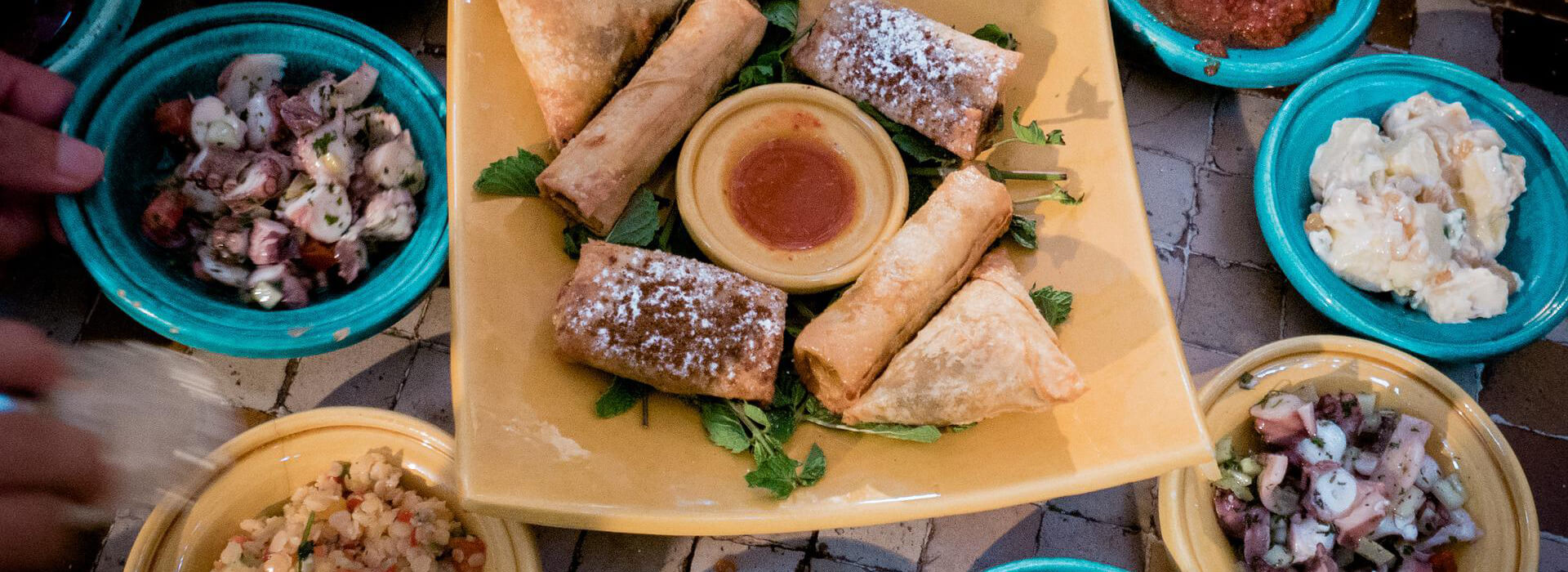
Often used as an appetizer, the dough is wrapped with fillings made of minced meat, seafood, vegetables, etc., then folded into cylindrical or triangular shapes and fried or baked until they turned golden brown. The taste is crispy and salty, slightly like spring rolls in China. Briouats are especially popular during the month of Ramadan.
12. Cinnamon cake
For the less adventurous with a sweet tooth, don't miss the Cinnamon Cake and Cinnamon Tea. The stall selling cinnamon cakes is at the outermost edge of the food stalls. It is easy to find. You can see a pot of "chocolate cake" and many bottles and jars on the table. It looks like a sesame chocolate cake. It has no chocolate flavor. It tastes like cinnamon. It is delicate and a little spicy, but it is not very sweet. Spicy cakes are not acceptable to everyone, but if you visit Morocco once in a lifetime, you might as well challenge your taste buds.
13. Chebakia
Chebakia are Moroccan sesame cookies that are shaped into flowers, deep fried, and coated with a generous amount of syrup or honey. Very sweet and extremely addictive, these delicious sweet treats are a must-try. This sweet treat is traditionally prepared during the month of Ramadan, and is typically served alongside Harira. It takes a lot of time and effort to prepare chebakia, so Moroccan women often ask sisters, mothers, or friends to help them in making large quantities of these cookies.
14. Khobz
Khobz is traditional Moroccan bread that is shaped into round, flat loaves and baked in an oven until it develops a crispy crust. It can be made with different types of flour such as wheat, bran, barley, and semolina.The round bread is torn into pieces and used as a scoop when eating dishes like slow-cooked juicy tagines, couscous or cooked vegetable salads.
15. Prickly Pear
The fruit of the cactus is another fruit beloved by Moroccans. There are huge cacti everywhere in Morocco. In the countryside, many people will plant a large cactus as a fence. Every June and July, the cacti begin to grow small ellipsoid fruits, sometimes hundreds of them on a single plant.
The flesh of the cactus fruit is green, orange and red, the most common in Morocco is orange, soft and sweet, with mung bean sized seeds in the middle.
In Morocco, vendors typically peel the prickly pear for customers to eat on the spot. At times, customers request their fruit peeled and bagged to take away and enjoy later.
Prickly pears, native to Mexico, first came to Morocco in the early 17th century from Spain. Not only do humans enjoy eating the fruit, it is also used to feed livestock, enriches soil, and contributes to Morocco’s biodiversity. Amazigh (Berbers) have a long history of using the seed oil from prickly pears to moisturize skin, hair, and nails.