Top 11 Things To Do in Hanoi
With incredible architecture, one of Asia’s most exciting street food scenes, and endless cultural sites to explore, Hanoi has a lot to offer visitors. An interesting mix of both Eastern and Western influences can be seen throughout the city as a result of Invasions by China, France, and the United States throughout the years.
As the political center of Vietnam, Hanoi is the best place to learn the nation’s history and history of Vietnam War (it was either called ‘The American War’ or ‘The Civil War’ in Vietnam).
Continue reading to discover the top 10 things to do in Hanoi.
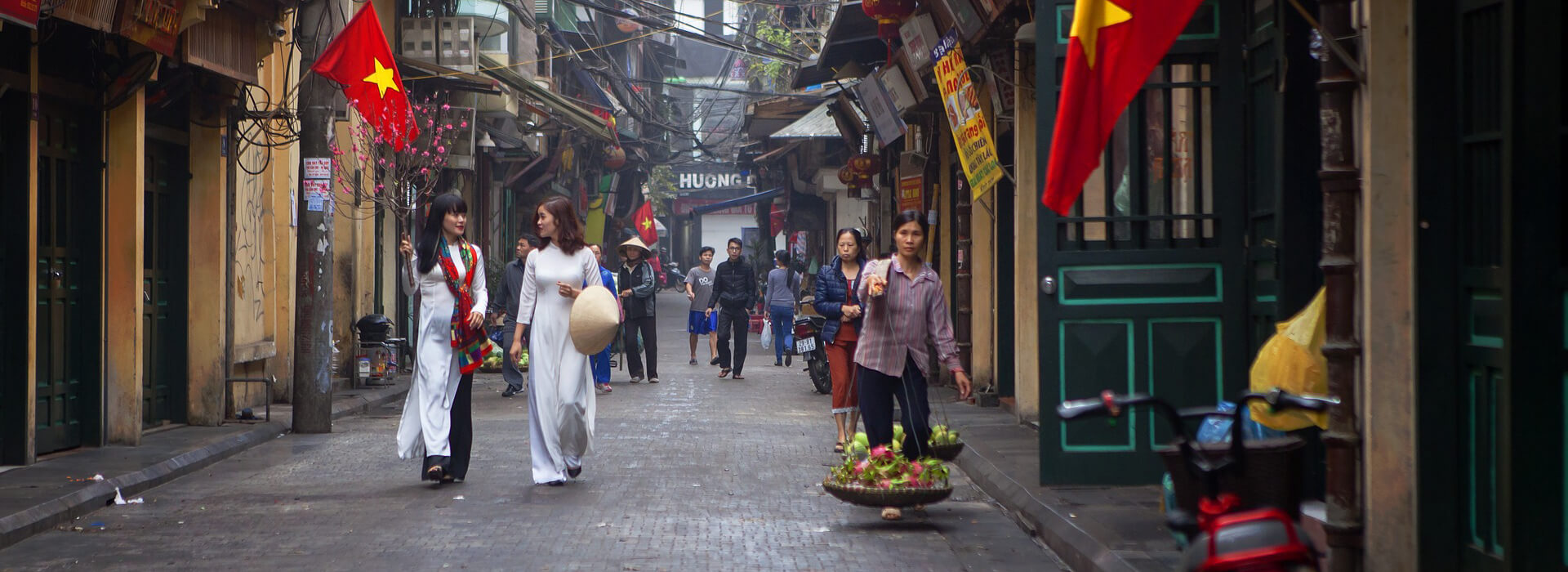
#1. Stroll the Old Quarter (36 Streets)
Your tour to Hanoi is no complete if you didn't visit the Old Quarter(also known as 36 Streets). In Hanoi, there is nothing more than 36 Streets that can make one's eyes shine and linger. The Old Quarter is an old district in Hanoi. Each street concentrates on the same kind of business or the same kind of goods. For example, Sauce Street, Clay Street, Clock Street, Iron Street, etc., you can find unique products in each street.
The Old Quarter’s narrow streets are packed with family-owned shops selling silks, stuffed toys, artwork, embroidery, food, coffee, watches, and silk ties.
#2. Watch A Water Puppet Show
The water puppet show is a traditional folk art form in the region of the Red River Delta that usually takes place on holidays, festivities, happy days, Tet holidays(Spring Festival or Lunar New Year).
The puppets move jerkily along the water's surface, their puppet-masters hidden from view behind a screen and the murky water. Musicians on either side of the pool provide vocals and music with traditional instruments.
Each puppet is a folk sculpture. Wooden puppets are chiseled with their own stylized lines, then trimmed, polished and decorated with different colors to enhance the traits of each character. The stage and puppets are awash in vivid colors; colored lights and a foggy mist over the murky water add to the mystery.
The Thang Long Water Puppet Theatre is the place to visit for this traditional art form, their show running 365 days a year.
#3. Sample The Street Food
Hanoi has the most vibrant street food scene in Vietnam. Fresh, light and gluten- and dairy-free, Hanoi street food is one of the healthiest cuisines in the world. It’s also one of the most delicious, thanks in part to the liberal use of herbs, lime juice and chili.
For breakfast, you can have plate of bánh cuốn (steamed rice rolls or Summer rolls) at Banh Cuon Thanh Van(12-14 Hang Ga). bánh cuốn is thin sheets of steamed rice batter filled with ground pork and minced wood ear mushrooms.
For lunch, we recommend a bowl of bun cha which included grilled pork, sweet broth, rice noodles, and greens. If you don't mind the large queue, you can go to Bún Chả Hương Liên(24 Le Van Huu) where the late Anthony Bourdain and Barack Obama had bun cha and cold Vietnamese beers for the 2016 Hanoi episode of Parts Unknown.
For dinner,it’s time for a bowl of pho,. Dubbed as the national dish of Vietnam, pho is Vietnamese soup consisting of bone broth, rice noodles, and thinly sliced meat (usually beef or chicken). The city is scattered with street shops selling the delectable rice noodle soup with a choice of either chicken (pho ga) or beef (pho bo).If you want to find the best pho, you can go to Pho Bat Dan(40 Bat Dan street) or Pho Thin( 13 Lo Duc street).
#4. Visit the Ho Chi Minh Mausoleum To Get insights Into Vietnam's History, Values and Culture
Ho Chi Minh Mausoleum is a vast granite and red marble structure which houses the tomb of Ho Chi Minh, affectionately known by some Vietnamese as Uncle Hồ. Founder of the Viet Minh, the Vietnamese Communist Party. The site on which the Ho Chi Minh Mausoleum is located was where Ho declared independence from the Japanese in 1945.
Ho served as the president of North Vietnam for 25 years; his powerful reign in the communist country symbolizes the struggle of the Vietnamese people's fight for independence from the anti-communist regime in the south and from that regime's southern allies, including the United States.
To get into to the mausoleum: you need to cover your shoulders and knees, remove headwear, check bags, phones and cameras before entry, and you will be expected to walk round in respectful silence. Guards are on hand to tell you off if you don’t adhere to the rules.
#5. Visit The Temple Of Literature
Built in 1070, the Temple of Literature is both a temple and an academy. It is one of the most famous attractions and places of history the city has to offer.
It's a temple dedicated to Confucius, meaning that it's a place where scholars and students formerly lived and studied. Beginning in 1076, the imperial academy opened and began to enroll students. The curriculum was largely Chinese-influenced and involved reading extensively about Chinese history, as well as classical Chinese literature and poetry.
The Temple of Literature is divided into five courtyards. The third courtyard hosts the Thien Quang well, with two large halls on either side that house the treasured Stelae of Doctors. The Stelae are turtle statues – carved out of bluestone – with the names and birthplaces of all 1307 graduates from 82 separate Royal examinations.
#6. Visit the Museum of Ethnology To Learn More About The Ethnic Groups In Vietnam
While over 85% of the modern Vietnamese people belong to the Kinh ethnicity, the country is home to 53 other ethnic minorities living in more secluded areas. Each has their own language, beliefs, and lifestyle, yet they all contribute to shaping the Vietnamese culture as a whole. If you want to learn more about the 54 ethnic groups in Vietnam, you should not miss this museum. It offers an excellent view of the customs and habits of 54 ethnic groups in Vietnam with various unique cultural features. You can find artifacts in different categories such as clothing, jewelry, weapons, musical instruments, religion, beliefs, and many other spiritual activities.
#7. Sit And Observe The Hanoian Pace Of Life At the Hoan Kiem Lake (Lake of the Returned Sword)
Located in the centre of Hanoi‘s historic district, Hoan Kiem Lake is a lovely, peaceful place with a fascinating history. As legend has it that the lake was where Emperor Le Loi returned his mystical sword to the Golden Turtle so that he could bring it back to the Dragon King.
Surrounded by walkways and gardens, the shore is the site of early-morning Vietnamese visitors performing their daily exercise routines or enjoying the peaceful lake in the growing light. All day long and into the late evening, the lakeshore walkways are crowded with walkers enjoying one of the most peaceful places in the bustling city.
#8. Learn More About Vietnam War At Hoa Lo Prison
Hoa Loa Prison was a famous prison located in Hanoi’s French District that received great notoriety because of its use by French colonial government, and later North Vietnamese fighters during the Vietnam War. It became the main holding camp for American Prisoners of War that were captured during the Vietnam War. The American POWs nicknamed it Hanoi Hilton. But actually their treatment was horrific and brutal. About 600 American POWs were interred here from 1964 to 1973, including John McCain, James Bond Stockdale, Jeremiah Denton and Robinson Risner.
#9. Visit The One Pillar Pagoda
One Pillar Pagoda, also known as Chua Not Cot, is a pristine and historic Buddhist temple located in Hanoi. The three square meter wooden pagoda stands on a single stone pillar (1.25 m in diameter) in the middle of a pond and is surrounded by beautiful gardens.
Considered to be one of the most iconic temples in Vietnam, this pagoda was built between 1028 and 1054. Dedicated to the Buddhist deity Quan Am or Bodhisattva Avalokiteshvara, it is believed that praying here will bless you with fertility and health.
As the name suggests, One Pillar Pagoda was built of wood on a single stone pillar. The Pagoda is built in the Buddhist architectural style, designed in the shape of a blooming lotus which rises from a magnificent square shaped lotus pond. The lotus not only symbolizes purity and hope but is also the Buddhist symbol of enlightenment. The sides of stone pillar bare beautifully carved Buddhist scriptures. The outer square shape of the temple represents yin, while the circular shaped column represents yang.
#10. Take a Vietnamese Cooking Class
For cooking buffs, you can participate in a cooking class where you will learn about valuable ingredients and techniques involved in Vietnamese cuisine. The cooking classes are a great way to dive headfirst into the country’s cuisine. And it will help you better understand the flavors and spices.
The cooking class usually included a brief Vietnamese language lesson and market visit. You’ll learn some Vietnamese words to buy what you need for class and bargain at the market.
#11. Sip A Cup Of Egg Coffee
Vietnam is country that's crazy about coffee. Many people don’t know that Vietnam is the second-largest coffee producer after Brazil.
The Cafe Giang(39 Nguyễn Hữu Huân) in Hanoi invented a special version called "cà phê trúng," or egg coffee. It is a cup of coffee whisked in sugar, sweetened condensed milk with egg yolks.
There are hot and cold versions. The cold version is served as a yellow concoction in a small glass. It's consumed with a spoon and tastes almost like a coffee flavored ice cream -- more like a dessert than coffee. The hot version comes resting in a small dish of hot water to maintain its temperature.